
No sentiment, just value
*****
Sentimental Value is a film about family relationships, in the Arthur Miller mould. The uncaring father is the villain of the piece, at least in the eyes of two grown-up children whom he abandoned in early childhood.
Said father, Gustav, a successful film maker now aged 70, returns to his ex-wife’s funeral wake, where he is reunited with his embittered daughters. The wake is taking place at the family home, a building that has been with them for three generations, a building that knows the family secrets, and shares them. The mother had worked as a therapist, and the young daughters could listen in on her confidential sessions via the piping from a woodburning stove, a conduit via which they could also hear their parents’ frequent rows that led to the break-up.
Nora deeply resents her father’s abandonment of his young family. Since his departure, she feels he has led the life of a dissolute bon viveur. Her own psychological battles are illustrated in an excellent early scene when she tries to overcome stage fright.
Gustav favours the documentary genre, but has a script ready for perhaps one final film, a drama that he hopes will star his elder daughter, Nora, a successful theatre actress, and his grandson, his younger daughter Agnes’s eight year old boy.
Ironically, a family that seems to thrive on communication by acting and directing, finds interpersonal relationships almost impossible. Trier uses the artifice of filmmaking and theatre production to immerse the audience into emotionally intense moments before drawing the camera away to show us the insincerity of the scene. ‘These are actions that a man might show … these but the trappings and the suits of woe,’ as Hamlet remarks to his mother. By contrast, the emotional yearning of Gustav for his daughters’ affection is not loud, but deep. Stellan Skarsgård won an Oscar for best supporting actor for this deeply moving, emotionally understated performance.
In flashbacks, we see a scene from one of Gustav’s early films starring Agnes, aged eight. The plot appears to centre on a traumatic family incident when the girl is separated from her brother by German officers. Unlike her younger sister, Agnes eschews the life of theatre, and turns towards academic history, a vehicle from which we learn the trauma of their grandmother, Gustav's mother. She, having worked for the Resistance, had been captured and tortured by the German occupiers, an experience that led to her later suicide.
In the eyes of Nora and Agnes, their father couldn’t care less about them. Without even reading the script, Nora turns down the opportunity to star in his film, because she cannot work with him. Gustav has to turn to another actor, the English star Rachel Kemp, played by Elle Fanning. Kemp struggles to get to grips with the part, and eventually admits defeat to Gustav. She cannot do justice to the role. She knows, as we do, that it is a part for Nora, and for no one else. It is the father’s confession, his extreme unction.
Eventually, Agnes reads the script and realises that their father knew, and knows, much more about his daughters than they realise, and has an empathy with his children which has been evident to the audience throughout. She persuades Nora to take the part.
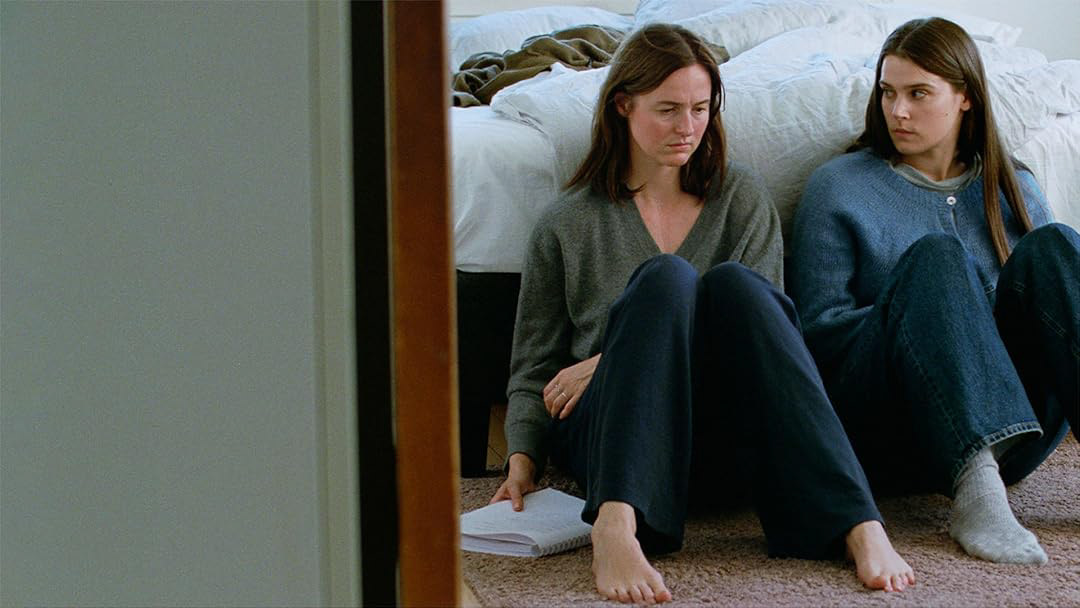
There are some beautiful moments in this unsentimental but deeply poignant film, not least when Agnes and Nora are lying on a bed, for the younger of the two to explain why the older one has been the more psychologically traumatised of the two sisters. And a scene when the father realises that his preferred cinematographer is too old and past it. Time has overtaken him, and is hot on the heels of the faltering Gustav, too.
Trier’s thoughtful script along with his penchant for lingering shots and unspoken truths, along with excellent performances by an ensemble of accomplished actors, result in a powerful, quite beautiful film.