
Relax at your peril in Laxe desert drama
Warning: review contains spoilers
*****
Oliver Laxe’s 2025 genre-bending road movie ‘Sirat’ calls to mind Ken Loach’s 1969 film ‘Kes’ for its documentary-style realism and its plucky use of non-professional actors. The dialogue, particularly the early exchanges, is awkward, brief and reticent. Perhaps this reflects the amateur status of the actors, or more likely Laxe’s desire to create a sense of authenticity in a cultural and geographic milieu that would be alien to most of his audience.
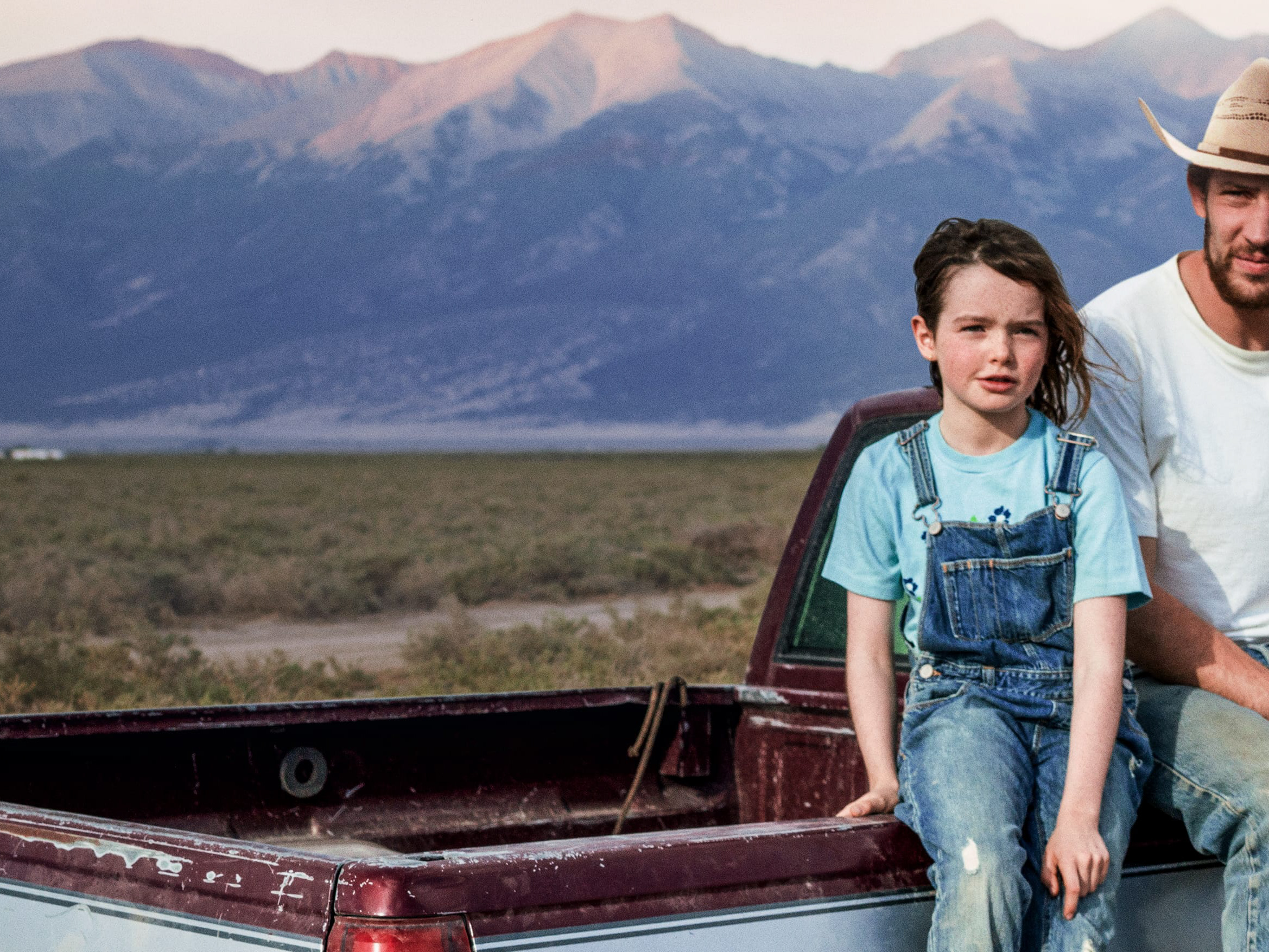
Sergi Lopez plays an anguished father, Luis, searching for his daughter who has been missing for several months, presumably having immersed herself in the drug-laden rave culture of the vast north African desert spaces. Luis is accompanied by his young son Esteban, and pet dog Pipa, travelling in an unlikely saloon car beside the monster, small lorry-like, well resourced vehicles of the desert-hardened ravers.
Long takes of spaced-out dancers gyrating like an earthworm on an angler's hook, writhing in isolation despite their proximity to fellow ravers, are accompanied by the thudding repetitive beat of music that bellows from the giant stacks of loudspeakers whose construction opens the film. They have rejected societal comforts and their trappings for an uncertain, nomadic, parched existence. It is a culture of escapism, sweaty and unwashed hedonism that is as unattractive and barren as the stale terrain through which they journey. It is T S Eliot’s land of “Rock and no water and the sandy road The road winding above among the mountains…”. The Waste Land, or land of the wasted?
Luis is middle-aged, overweight, determined, and out of place. The ravers, also middle-aged, look weather-worn, escapees from a society prone to military disaster, as we learn from brief snippets of radio news bulletins in their convoy of giant campervans and battered motorhomes. Having been evicted by an uncompromising army platoon from their desert rave location, a small ensemble breaks away to seek another, even more remote and desolate substitute venue.
Luis and his new found friends prove resourceful. Two of the breakaway ensemble are amputees. They all just get on with life, regardless. They help to cure Luis’ and Estaban’s dog who has lost consciousness having swallowed some faeces laced with LSD deposited unburied by one of the travelling ravers. They drag Luis’ car across a river with the help of a tow-rope, and brutally remodify the front end of his vehicle for rocky-terrain purposes. Luis for his part helps to fix a broken wheel on one of the camper trucks. They pat each other on the back, to confirm with us, the innocent and comfortable audience, that at long last and after so many setbacks, things are starting to go well, as we relate more willingly to these voluntary outcasts from society’s troubled times. They’ve passed the Slough of Despond. Perhaps Luis will find his daughter.
And that’s when Laxe hits you. Just when you’ve dropped your guard. Thump! Straight in the stomach. And then more! Just when you think the music and dancing might provide some psychological relief. Bang, and again. Again! Until a nerve jangling scene of tension. Sirat is the bridge over hell, in Arabic culture, which people cross to achieve paradise. It's Bunyan's River of Death in The Pilgrims Progress. A close-up of two characters, clinging to each other, step by step. The audience fears the worst. But when? What second? What step? Laxe treads the fine line, so so close to melodrama, but real enough to grip our senses. It’s a brilliant piece of narrative tension.
Laxe cuts straight to the dénouement. Three have survived. They travel in a crowded open-top train across a vast desert. We do not know the destination. The passengers, unlike the ravers, are mainly African or Middle Eastern in appearance. Victims of war, refugees, gazing vacantly outward, desolate, hopeless.
Apart from the brief eviction of the ravers early in the film, military personnel do not feature. But the threat of military catastrophe pervades the narrative. Our chastened raver survivors are not together, but interspersed, dispersed along the train. Disaster, man-made or fateful, preys on all, even those who wilfully detach themselves from a war-strung world.